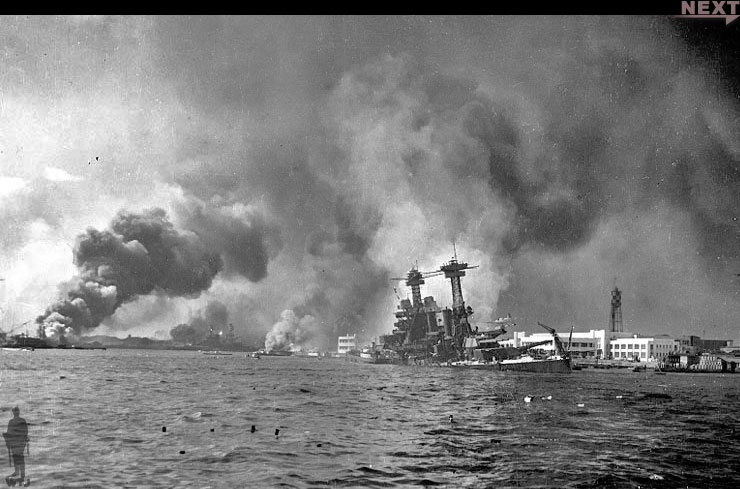
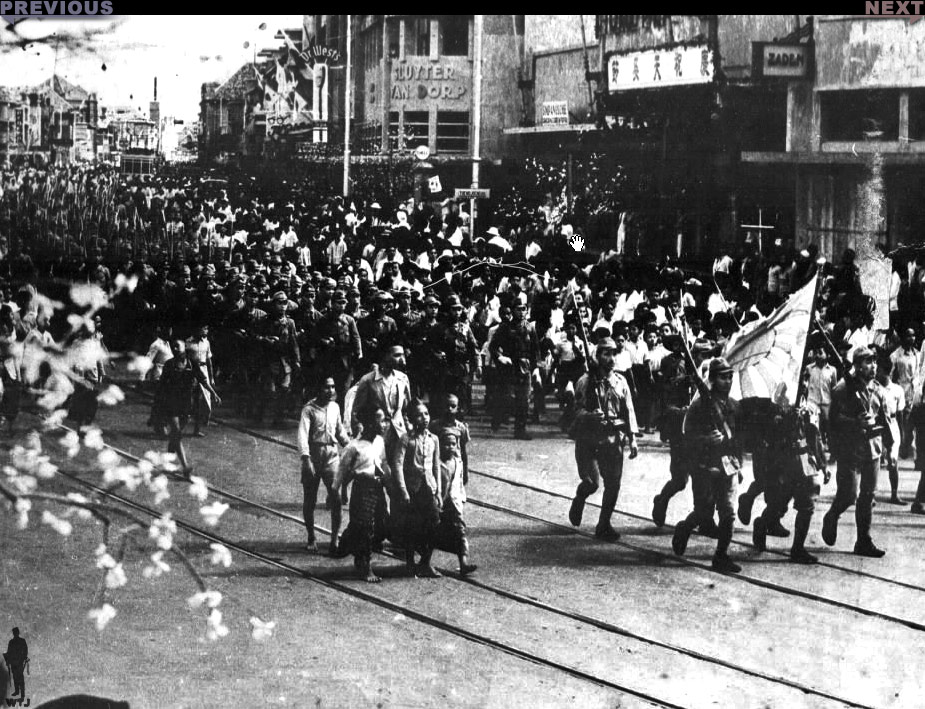
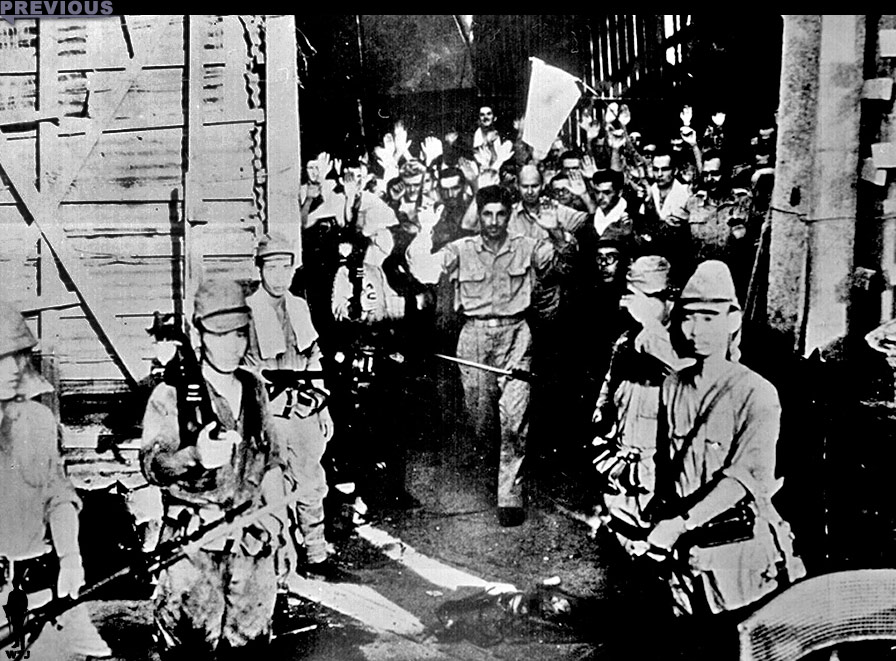
Early on the morning of December 8, 1941, the Second
World War in the Pacific was begun with an amphibious attack by Imperial
Japanese Army troops on the northeast coast of British Malaya. Within hours
they pushed their way inland despite heavy transport losses at the hands of the
few British aircraft that were in the area. Other attacks by Japanese forces
across the Pacific followed in rapid succession, the largest of them aimed at
the giant American naval base at Pearl Harbor, Hawaii, where it was still
December 7.¹
Over the following days a meticulously planned
campaign unfolded as Japanese forces launched themselves against key American,
Dutch and British Commonwealth units in the Philippines, Siam, Malaya, the
Dutch East Indies and China, the ultimate goal of which was Japanese control of
eastern Asia and the western Pacific. The Japanese government believed that
once these regions were firmly under their control, the Allies – and
especially the United States – would sue for peace rather than fight a
bloody war in distant lands. The Japanese however, did not anticipate the angry
backlash which came as a result of their use of force at Pearl Harbor. A
negotiated settlement of the type envisioned by Japanese high command became
impossible. In the end, a grimly determined Allied coalition fought its way
back across the Pacific, island by island, until the twin spectres of nuclear
bombardment and war with the Soviet Union forced Imperial intervention and the
end of war.
1941 - The Start of War
The Japanese offensives
of 1941 were composed of several bold moves across the western pacific basin,
something never before attempted on such a large scale. This military solution
called for the complete occupation of Southeast Asia and the Dutch East Indies
in order to secure much needed raw resources. The most famous part of this plan
was executed with a dawn attack against the American Army and Navy bases
located on the pacific island of Oahu, Hawaii. Most technical goals for the
attack were achieved with clock-like precision by the cream-of-the-crop of
Japan's naval aviators. They did not however, catch any of the priceless
American aircraft carriers in port, nor did the Japanese task force commander
authorize a second round of sorties which were strongly recommended by his
flight officers. This second sortie could have destroyed valuable American oil
reserves which lay in vulnerable surface storage tanks immediately next to the
harbor. The attack itself united American public opinion in ways that the U.S.
government could never have achieved. Japanese officers later acknowledged that
the core damage caused by the sensational attack – the sinking of a
relatively few older American battleships – was not worth the sustaining
effect it had on the American war effort.
As news of the devastating
raid against Pearl Harbor was telegraphed to Washington, orders were sent far
and wide to American and Commonwealth forces in the Pacific "...a state of war
exists... commence hostilities." American General Douglas MacArthur lost a
golden opportunity to blunt the effects of the pending Japanese attack on his
Philippine command. Unbeknownst to him the Japanese bomber fleet in Formosa had
been delayed by weather, allowing an eight-hour gap to occur in the tight
Japanese time table. MacArthur wasted this precious window of opportunity by
failing to put extra fighters into the air. He didn't scramble his bombers to
alternate airstrips. He did not even move the hundreds of aircraft under his
command off of the open tarmacs where they were arrayed in neat rows. Virtually
no action was taken despite the very recent knowledge that the German Luftwaffe
had devastated grounded enemy air fleets in the opening minutes and hours of a
campaign.
When Japanese bombers finally arrived late over the
Philippines, they were surprised to discover no extra resistance, no extra
fighter opposition, and best of all the entire American bomber fleet lined up
neatly in rows. The war was certainly off to a good start for them.
 Within two days Japanese infantry
landed in Northern Luzon and by December 22 an entire army had successfully
come ashore, triggering the allied evacuation of Manila and a fighting
withdrawal to the Bataan Peninsula in southwestern Luzon. Within two days Japanese infantry
landed in Northern Luzon and by December 22 an entire army had successfully
come ashore, triggering the allied evacuation of Manila and a fighting
withdrawal to the Bataan Peninsula in southwestern Luzon.
For the
British and their commonwealth allies, December 8 was an equally bitter day.
War sightings arrived furiously as a series of Japanese convoys landed troops
along the coasts of Malaya and Siam (Thailand). The first shots of the war were
fired by the Japanese when they downed a British plane attempting to shadow
their Malaya-bound troop convoy. The main warship presence in the area was the
Royal Navy’s Force Z, centered on the new battleship Prince of Wales, and
the elderly battlecruiser Repulse. Both vessels were originally sent by the
British government as a warning to Japan of Royal Navy might. But as of the
evening of December 8, even the pugnacious Winston Churchill admitted that he
had become concerned about its safety. This concern came too late, as Japanese
bombers caught the two battleships as they retired to Singapore and sank both
of them within a few hours. By late December, the British garrison at Hong Kong
was forced to surrender, as had a tiny U.S. Marine garrison on the central
Pacific island of Wake. The American Army was pinned in place on the Bataan
Peninsula in the Philippines, and the British defenses on the Perak River in
Malaya were penetrated. This last loss triggered another retreat south into
Singapore. The year 1941 ended on a very grim note for the Allies as Japan's
military machine swept everything before it.
1942
Early
1942 saw the Japanese complete the execution of their war plan. On January 10,
Imperial forces began the second phase of conquest by landing in the northern
areas of the Dutch East Indies. By the middle of the month Burma was invaded
and in early February after a brief defense, British General A.E. Percival
surrendered Singapore to the Japanese. A disjointed defense was prepared for
the southern Dutch East Indies, but this was quickly overcome by meticulously
orchestrated blows delivered at the hands of the Japanese Army and Navy. The
local allied fleet was virtually wiped out during the Battle of the Java Sea
and its aftermath. As the sea-lanes were cleared of allied naval threats,
multiple landings took place throughout the key southern islands of Sumatra and
Java, completing Japan's advance to the edge of the Indian Ocean. On April 8,
the American Army in the Philippines surrendered to Japanese troops besieging
them at Bataan, and on May 5, the harbor bastion at Corregidor also fell.
|