A
R
T
I
C
L
E
S |

COLLECTING
MILITARIA
AN OUTLINE FOR BEGINNERS
The last decade has seen a huge increase in the number
of people who collect militaria and war relics. There are many reasons for this
including the recent passing of the fiftieth and sixtieth anniversaries of
World War II. Other reasons include the Internet and the popularity of newer
and more realistic movies such as the fictional Saving Private Ryan and
the even better non-fiction story of the 506th Parachute Infantry Regiment in
Band of Brothers. Renewed interest is likely to continue as follow-up
movies are released, such as the upcoming Band of Brothers sequel The
Pacific. The rapidly approaching one-hundred year anniversary of World War
I is likely to push militaria from that war further into the limelight that
World War II items already enjoy.
Those interested in owning a genuine
piece of history are almost immediately faced with a couple of decisions: what
do I collect and how do I know it is real? What to collect is mostly up to
personal preference. But typically how and what you collect will fall into the
following categories:
What to collect
Some people collect a
bit of everything; uniforms, helmets, flags, belt buckles, medals. These
collectors may end up with full sized mannequins on which to display their
collections. Other people may focus on just one equipment type and collect a
wide variety from various nations. A similar type of collector is one who
collects by nationality, the most popular being German, American and Japanese,
followed closely by British, Russian and French. The ultimate specialists
– and these collectors do exist – are those who collect only certain
items from certain nations, sometimes even specific vital pieces of an item.
For example there are specialists who collect and study only United States
silver and bronze star awards and their World War II recipients, or the
embroidered insignia that were stitched on German uniforms and caps during the
same time period. Some people might specialize even further within one of these
groups. Such “super specialists” are valuable to the antique
collecting community because they can often tell at a glance when something was
made and maybe even which company manufactured it. For expensive or popular
items this is an important resource.
Your own interest in history can
help you to decide what to collect. If there is a particular war and theater of
operations that have always interested you, consider collecting things from
that area. You would be surprised at how many people I know who collect German
World War II militaria because “that’s what lots of other people
collect” and yet their own historical interest is something else –
maybe the Vietnam War, or the British in World War I. Collect what already
interests you. One of the main reasons German military antiques are so popular
is that a large amount of them were brought back from World War II (and also
World War I) and the general lack of standardization meant that German uniforms
and equipment exhibited a great deal of variety. These two factors help to
sustain interest in that particular genre of collecting, however many militaria
collectors are interested in more than one nationality. For example many people
who collect German helmets also tend to collect American helmets.
As
for how to collect, that partially depends on where you live and what you are
interested in collecting. Do understand that some items that are rare are also
going to be expensive. But not everything is rare and it is usually not good
for beginners to become infatuated with rare items. Some people have commented
recently on the high prices of militaria, but in reality the rare items have
always been expensive. A German Fallschirmjager (paratrooper) helmet can easily
cost $9000 today, but in 1980 they cost a stiff $500, which at the time was
more than three months rent for an apartment. That was a lot of money. By
comparison, a typical Imperial Japanese navy cap from late World War II can
currently be purchased for $250. So there are plenty of interesting things on
the market that aren't too expensive to collect.
But still, broadly
speaking rare things will cost a lot and popular things cost extra over and
above their respective level of rarity. Good examples of the later are German
helmets, which are not particularly rare but are very widely collected. This
demand drives up the price because there are people who collect them by the
dozens. For more easily collected militaria, try items that are not subject to
the competition of crowded collectors niches – maybe British helmets or
German Luftwaffe (air force) pilot’s caps. It is funny that a steel
Luftwaffe helmet or officer's visor hat will cost well over thousand dollars
but a good pilot’s cap can be bought for a few hundred. And yet the pilots
and their aviation gear were the mainstay of German air force operations. So
there is always something interesting around that can be collected for a
reasonable value.
One last note regarding what to collect, and
that relates to what I call “hyped” items. These are items for which
people have developed some kind of fascination which exaggerates their
importance. Hyped items are often far more expensive than would normally be
justified, and in any case it is good to discourage such sensationalism.
| US Marine Helmet from WWII |
 |
One possible example of this is Normandy
Camouflage German helmets. Especially after the movies Saving Private Ryan
and Band of Brothers came out, collectors – and especially new collectors
– have become infatuated with acquiring German helmets that were
“there” at the battle. Because a certain pattern of colors
hand-painted over a regular German helmet is known as having been a pattern
used by German troops fighting in the Normandy region, any helmet with that
color scheme is immediately called a “Normandy Camo” and its price
skyrockets. Of course this has encouraged dishonest people to take genuine
helmets and re-paint them using those colors. It can be difficult to tell the
difference and in any case, it is questionable whether people should pay extra
even for the real thing. Advice for beginners: stay away from hyped items. They
will still be around after you learn more and they often should be left to the
specialists who deal with them on a regular basis.
Other examples of
hyped items include American militaria “groupings” and Japanese Naval
Landing Force (NLF) gear. The later are sometimes called Imperial Marines in an
attempt to bump up the selling price. The cold truth is that the Imperial
Japanese Navy during World War II did not have marines. The NLF were naval
infantry, not assault troops and they functionally ceased to exist after 1943.
Anyone selling late war Japanese navy gear and calling it “NLF” or
“Japanese Imperial Marines” is just trying to get more money for a
standard navy issue piece of equipment.
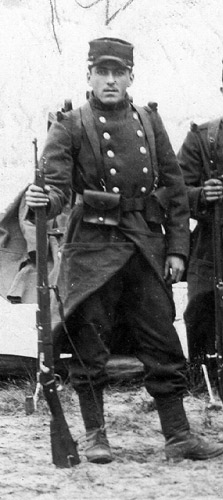 Do your homework Do your homework
Now comes the part that
requires some homework: Authentication. Fortunately things that are genuinely
old have ways of aging that are difficult to recreate. Some people try to
recreate aging and some do a very good job. But still, artificial aging looks
different than real aging. That is in your favor. But you do need to look at
and handle genuinely old items first in order to develop a good sense of what
is old and real.
The most common reproduction items you will encounter
are those made for living history or re-enactment groups. A typical re-enactor
is a real stickler for reality and the historical accuracy of their uniforms,
so the equipment can often pass for the real thing - except the critical issue
of age and materials. Even the best reproductions will usually display
differences in construction such as stitching, cut and material. For example
the use of polyester thread instead of cotton is a clue that something is of
modern construction. Running a burn test on a tiny bit of thread reveals a lot:
60 year old cotton turns to ash, 10 year old polyester melts into a black
clump.
A whole other genre of reproduction is the item that was made
right from the beginning to fool militaria collectors. This type of fake is
usually for more expensive items, from awards and visor caps to tunics and
helmets. A common trick is to take a genuine period item and add a reproduction
element that will boost its price. A good example is the expensive German
panzer (tanker) cap. Some supposed panzer caps are actually original – but
less expensive – infantry caps with the fabric piping color carefully dyed
pink to boost the price. Such items are not original panzer caps. If you are
going to buy a panzer cap, you absolutely must know what the real piping should
look like.
Other similar fakes are medals and awards. Typically the
reproduction medals will show small flaws that the originals did not have. Many
of these flaws appear throughout entire batches of fake parts and these
“families” of fakes get named by collectors, like “The Double
Dot Tank Badge” named after a fake German tank badge that has two pits in
it. Beginners who have not done their homework will often be fooled by these
high quality fakes. Again, do your homework and ask questions of the more
experienced collectors. Learn before you buy.
The best way to learn
about real military equipment is to invest in available specialty books that
have been created by people who spent considerable time and effort examining
and categorizing the very items you wish to study. The most important advice
that can be offered is study, study, study. Learn everything you can about the
subject that interests you. The best single publisher relating to militaria is
Schiffer. They offer a large assortment of reference books about uniforms,
headgear, medals and even parachute harnesses and inflatable rafts.
To
learn more directly from the militaria collecting community, visit on-line
forums that are frequented by experts in their fields. There are some very good
ones, although as with any on-line forums there are varying grades of
self-appointed experts. Take some time to learn who-is-who.
Where to get it
Now that you have thought about what you
want and picked up a few books, you would like to actually get your hands on a
piece of history. Where do you go? The most common sources are militaria
dealers, fellow collectors, the original owners and on-line auctions.
| A Collection of WWII German "Afrika Korps"
uniforms |
 |
As with anything, militaria dealers vary enormously in
quality. Some have excellent reputations and others are widely distrusted.
Remember that because they are reliant on a steady income, dealers are salesmen
first, historians second. That should be considered in all evaluations, but the
reliable dealers will make a good effort to report the true condition of their
goods. Typically a dealer will have an area of expertise, but often due to
market forces he will carry militaria that is outside his particular specialty.
In such cases, serious collectors typically notice a difference in quality
amongst a store’s selection. One store might have a good quality American
selection and questionable German equipment, another store might have a "top
shelf" selection of German equipment and a questionable offering of Russian
gear.
Ask around before buying, spend some time comparing stock at
different on-line dealers. Do not jump into a purchase until you have looked
around for a few weeks (or months). One of the most common mistakes people make
is believing they must grab something or miss out – only to discover that
the items in question are more available than they thought (or were led to
believe). A common phrase used by dealers is “hard to find.” They say
this in order to avoid saying something is rare when it is not, while still
making the visitor believe that they need to grab this one right away. Very few
things are that hard to find.
Even if you miss out, that is money that
you will have to buy something else unusual. There are always unusual things to
be had. Visit on-line discussion forums, because many of them already have
hundreds of postings that discuss dealers. Visit the dealers at shows, which
are usually advertised well in advance. Expect good service if you are paying
good money.
There are two broad categories of original owners: the
actual owners of the equipment as it was issued, and the guys who ended up
taking the equipment away from its original owners. These later examples are
often referred to as "vet pickups" and the equipment in question is generally
enemy equipment. It's very common for a people to be more interested in enemy
equipment than their own, hence the strong interest in the United States for
German and Japanese equipment from World War II.
| A Japanese Army cap being held by the US veteran who
captured it |
 |
In either case, acquiring this sort of militaria
requires that you know the veteran and manage to come up with some sort of
agreement for the sale of the gear. It is important to remember that just
because something came direct from a veteran, that doesn't mean it is
guaranteed genuine. I know of people who bought "guaranteed vet pickup" gear
from an old vet, only to discover some low grade copies that the old guy had
bought back in the 1950s and mixed in with some genuine gear he had actually
taken during the war. As some people say, buy the equipment not the
story.
Now on to auctions. Buying from on-line auctions requires a
good knowledge of what you are bidding for. A hefty percentage of what is being
sold in the “originals” sections of on-line auctions are fakes and
reproductions. It is certainly possible to get a $2000 item for $50, I have
personally seen it happen. But if you do not know real from fake on
sight, you could be ripped off by one of the dozens of auctioneers out
there who specialize in getting people to spend $400 on items worth only $50.
And this later scenario is far more likely unless you know better. Learn to
identify specific gear on-sight before venturing into the auction world.
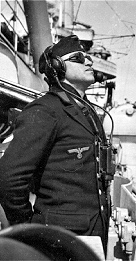 Just came in the mail Just came in the mail
Now you have gotten your first piece of militaria, probably by mail and
probably from a dealer. The first things to remember are the rules of return.
You should only buy from a dealer or collector who offers an inspection period
for each purchase, which allows you to check the piece and return it for a
refund within a specified number of days. One important rule associated with
the inspection period is that you cannot tamper with the item in any way. If
you do, you do not get a refund even if the piece (or parts of it) somehow turn
out to be fake. So the golden rule is “If in doubt, return it,”
period. Do not mess with any item if you have the slightest shred of doubt or
concern about any part of it. In those situations, just take some pictures, box
it back up and return it.
Once you have opened your box and checked the
latest piece in your collection to make sure it is acceptable for display, you
can give some thought to the display itself. It is best to have a case that
will help keep the dust off of things, especially items made of wool and other
delicate cloth. As of the time of this writing, many collectors have been using
cases and cabinets made by Ikea of Sweden, a company that has large showrooms
internationally.
And that's all for Collecting Militaria
101. If this article seems filled more with warnings than tips for
enjoyment, that is only to help with later enjoyment of what is a vital and
fascinating pastime. Historical militaria is an important and tangible remnant
of the past, which helps people to remember that these events actually
occurred. Helping to preserve these items for future viewing is a vital
contribution to the study of history.
If you have a question about militaria, please feel
free to contact us at: webmaster@wtj.com |
|


)
)
)