A
R
T
I
C
L
E
S |

THUNDER
GODS AND KAMIKAZES
THE SUICIDE AIR OFFENSIVES OF WORLD WAR
II
 "All right you little gods. You've had the balls to come
this far, now we'll see if you can go all the way! Me, I'm just an ordinary
guy. If you've brought your name cards, you might as well donate them to the
war effort, because your not going to need them. And if you're still virgins,
you better go out and get laid right away!" "All right you little gods. You've had the balls to come
this far, now we'll see if you can go all the way! Me, I'm just an ordinary
guy. If you've brought your name cards, you might as well donate them to the
war effort, because your not going to need them. And if you're still virgins,
you better go out and get laid right away!"
Lieutenant-Commander Goro Nonaka |
By James
Burbeck
One hot summer afternoon in 1944, Lieutenant-Commander
Tadanao Miki of Japan's Aeronautical Research Laboratory was called into his
commander's office to sit in on a conversation with a visiting officer. Miki's
research section had been struggling with guidance problems inherent to German
rocket designs recently transferred to Japan via submarine. He had already
received many useless design recommendations from well meaning visitors and was
quickly tiring of the distractions. On this particular day the visitor was a
Sub-Lieutenant Shioichi Ota, hardly an encouraging prospect. Miki sat down to
listen although he was sure that this man had come to offer another ill
conceived idea for rocket guidance – it was worse than anything he could
have imagined. Ota and his superiors had "eliminated" the guidance problem by
placing pilots on-board the rockets. The stunned lieutenant-commander quickly
pointed out several shortcomings of such an idea; besides the terrible effect
it would have on morale, the short range of the weapons would require that they
be carried on mother-craft which themselves would be vulnerable to the enemy's
burgeoning air power. Miki was indignant that his research team was being
implicated in such a desperate and wasteful diversion.
Unfortunately
the decision was already made. Miki and his team would design an
operational flying bomb and they were expected to begin soon. A yearlong cycle
of increasing desperation had finally reached the point of no return. Japanese
armed forces high command previously resisted the idea of "special attacks" as
they were called, because of the dire consequences such operations would have
on discipline. Now they gave in to demands that something be done to stop the
Allies. Grudgingly the formation of the Thunder Gods Corps was authorized and
the way cleared for construction of special "sure hitting" attack craft. The
first Japanese kamikaze and thunder gods offensives were soon to become a
reality, and for the first time since 1942 Japanese pilots would be given the
opportunity to regain the initiative, but at the ultimate cost.
The
Japanese kamikaze offensives of late World War Two have become legendary for
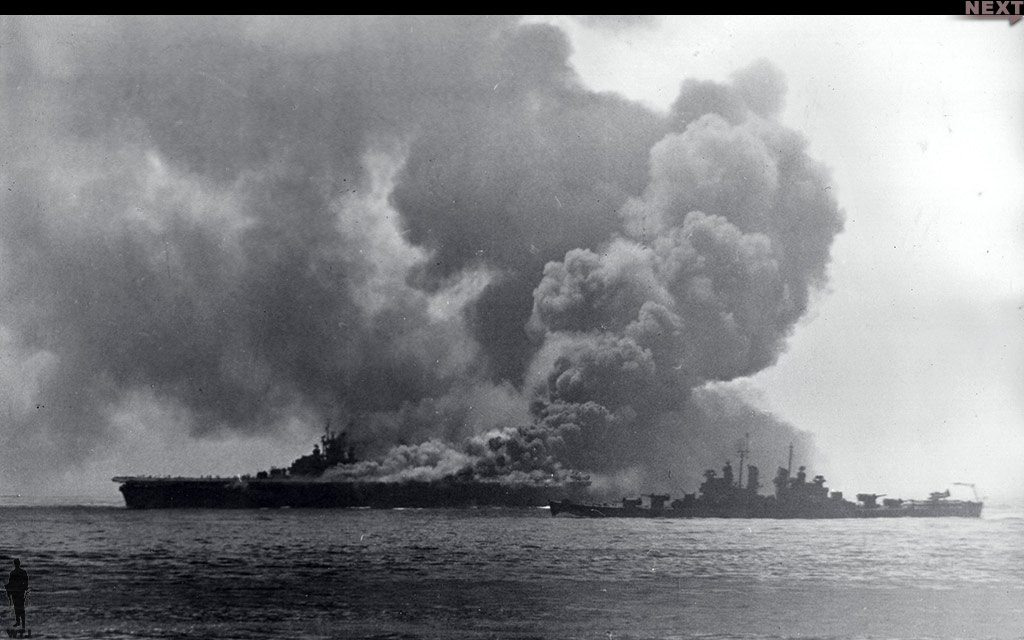
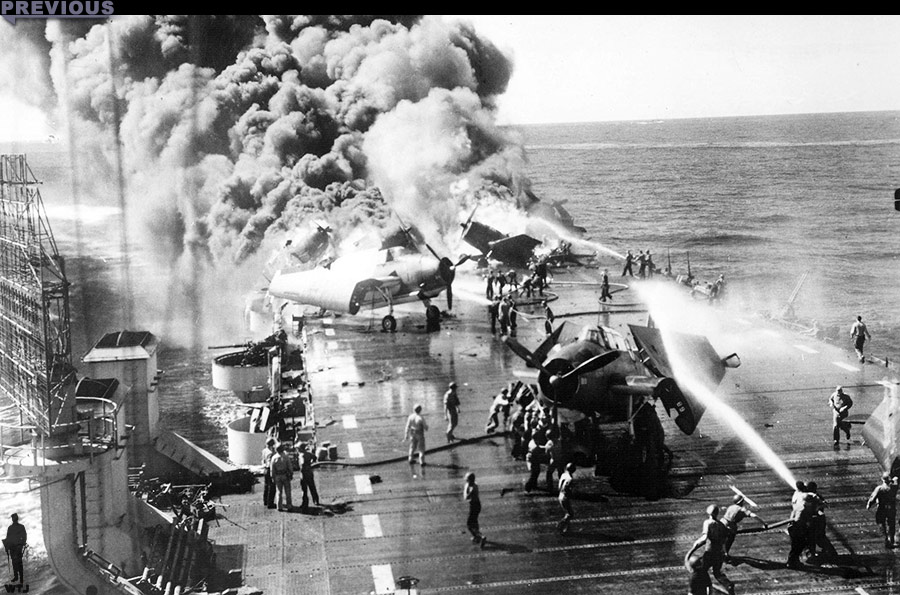
their determination and effectiveness. One renowned victim attributed to the
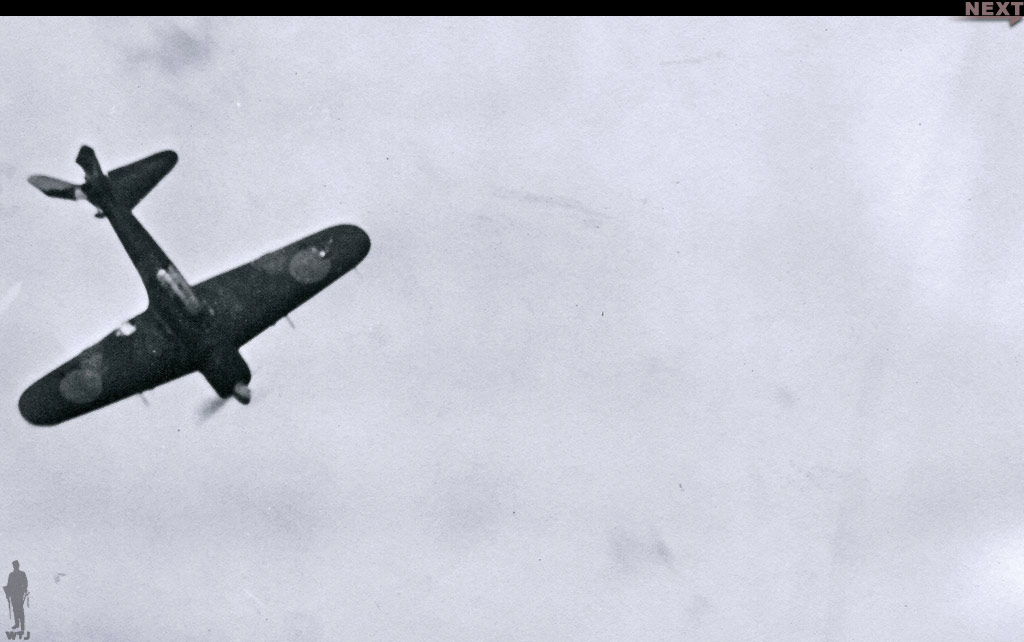
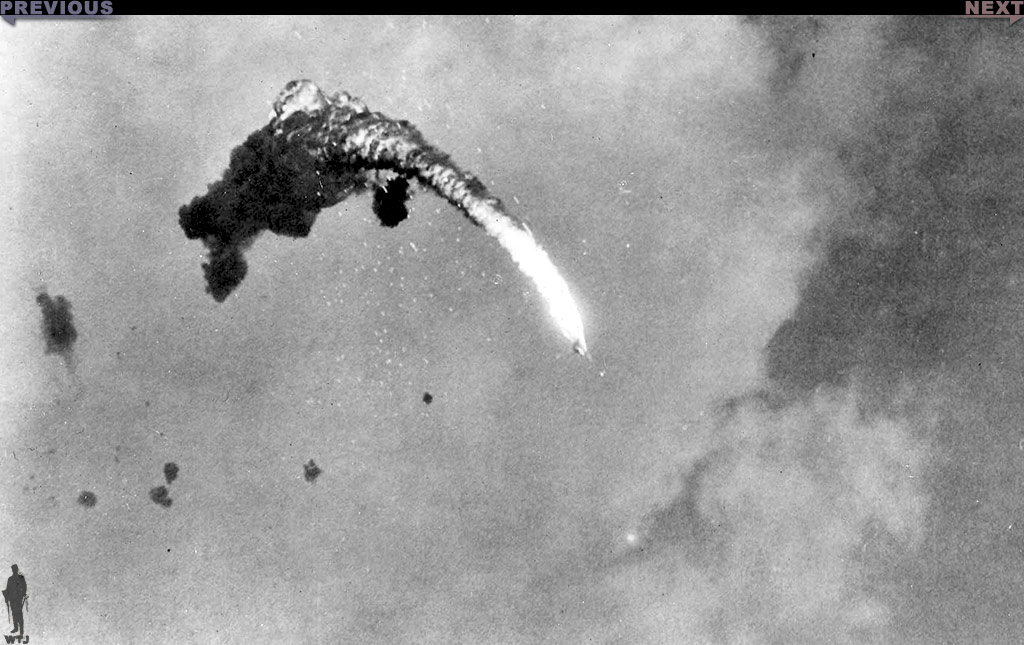
kamikazes was the American aircraft carrier USS Franklin. Ironically a Japanese
dive-bomber pilot who successfully delivered his twin bomb load was actually
responsible for the Franklin's saga. It is a testament to the devastation
wrought by the kamikazes that virtually all late war losses are attributed to
them.
The First Rumblings The idea for a
kamikaze campaign began not with imperial high command but with lower level
field officers who began reporting acts of spontaneous body crashes by
their pilots and crews. One of the first officers to officially broach the
subject was Captain Motoharu Okamura. He and his superiors arranged for the
first investigations and reports on the plausibility and designs for
premeditated body crash attacks. The investigations however, were just
convenient methods to gain more political leverage and they gave the growing
number of proponents the influence they needed. Soon the thunder gods program
was well underway despite its relative unpopularity. As the Thunder Gods Corps
was officially coming into existence in October, 1944, Vice-Admiral Takijiro
Onishi requested permission to use bomb-laden fighters in a Kamikaze offensive
at his new command in the Philippines. He received permission with the
provision that all participants be volunteers. The stage was now set for
parallel suicide attack programs: the Thunder Gods and the Kamikazes.
The special attack program was a divisive issue within Japanese military
circles. Many veteran field commanders thought the idea a huge waste of
valuable assets. Certainly they were willing to sacrifice themselves, but in
genuine combat, not on one-way missions to certain death. Lieutenant-Commander
Goro Nonaka was openly critical of the rocket bomb project from the very
beginning. He commanded the medium bombers which were to act as mother ships
for the thunder god's Ohka rocket planes, and he anticipated many of the same
problems predicted by Tadanao Miki at the research lab; namely the short range
of the rocket plane and slow speed of the mother ship. These two factors
required Nonaka's men to slowly approach within visual range of an alert
American task force in order to release the rocket planes fastened to their
fuselages. He saw no way for his bombers to achieve such missions, and became
convinced that the bomber crews were as doomed as the Ohka pilots. He was to be
proven painfully correct.
The Philippines
The
Difference
| There were two basic types of
"special attack" groups. Kamikazes were line pilots who used their own
aircraft, commonly fighters, to crash into enemy shipping. Thunder Gods were
specially trained pilots who used the Ohka, the manned Japanese equivalent to
the German V-1. Once the Ohka's vulnerability became apparent, some Thunder
Gods switched to flying fighter-bombers overloaded with standard ordinance. The
resulting unit was called the Kemmu Squadron, although it remained closely
associated with the Ohka operations. Thunder Gods were true volunteers, whereas
an unknown number of kamikazes were pressured into the service. One kamikaze
pilot was known to have strafed his commanding officers headquarters building
before heading out on his final mission. |
Vice-Admiral Onishi arrived at his new Philippine
command in early October, 1944, still determined to use the newly approved
kamikaze tactics against the approaching invasion fleet. His goal was nothing
less than the sinking of all American carriers, which would clear the way for
the main Imperial surface fleet to blast the invading transports into the sea.
Onishi himself ended up announcing the request for volunteers to the first
group of 201st Flying Corps pilots at Mabalacat Air Base. When the pilots and
their officers requested to hear approval for the suicide program from their
own commander – Captain Sakai Yamamoto – Onishi lied to them, saying
that Yamamoto already knew. In reality Captain Yamamoto was hospitalized near
Manila due to an automobile accident and totally unaware of what Onishi was
telling his men. All 23 pilots volunteered.
Within days the first
suicide missions were flown against the Allied fleet at Leyte. The missions had
an immediate effect, causing far more damage to the heavily defended American
ships than traditional air attacks had been able to inflict. An emotional
Admiral Onishi immediately announced the supposed "crushing success" of the new
method and told the combined officer corps of the First and Second Naval
Aviation fleets that the kamikazes would be used to sweep the Allied fleets
from the sea. No further debate or objection would be tolerated.
Meanwhile the first 100 volunteers of the Thunder Gods Corps continued their
training while construction of the first 150 Ohka rocket bombs moved at a
feverish pace. The original Japanese plans were to deploy the Thunder Gods to
the Philippines and Formosa, but American carrier groups and submarines
effectively paralyzed movement south from Japanese ports. The magnitude of the
American effort was driven home when Japan's new super-carrier Shinano
was sunk by the American submarine Archerfish on November 27, 1944.
Crated up in Shinano's holds were the first 50 Ohkas to be completed by
Miki's Aeronautics lab. This loss was severe enough, but when the carrier
Unryu carrying the next 30 Ohkas was sunk en-route to the Philippines a
few weeks later, it became apparent that the Thunder Gods offensive would be
badly delayed.
As news of these setbacks spread, discipline of the
Thunder Gods volunteers themselves became more difficult to control. They had
volunteered to kill themselves in the belief that they would be the famous
vanguard of an avenging force. Now the Kamikazes had struck the first blows and
indefinite delays were being declared, causing the men to feel that their lives
were to be squandered. Drinking and insubordination dramatically increased and
men took to sleeping off base without permission. Some officers mercifully
allowed these indiscretions but others felt the need to maintain discipline at
all costs, which in one case triggered a nighttime melee at the Thunder Gods'
home base at Konoike.
As the new year arrived, the Allies continued
their preparations for the Okinawa invasion, which would be the first large
scale occupation of native Japanese territory. The preparation for this
included massive carrier airstrikes against bases in Southern Japan. It was for
this developing situation which Japanese high command now found itself ill
prepared.
The First Strike
Enforced Leave
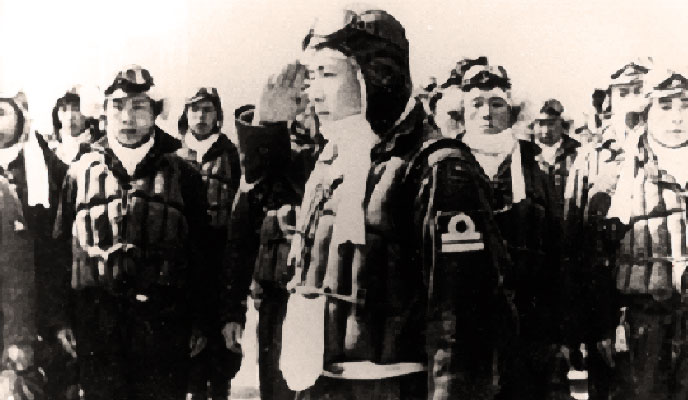
In mid-January 1945, the men of the
Thunder Gods Corps were encouraged to visit their families. Even
Lieutenant-Commander Nonaka, the flamboyant veteran bomber commander, was
ordered home to visit his family who fortunately lived in the nearby town.
Before he returned to base early the next morning, he walked out into the cold
morning air and suddenly asked his wife to dance, which they did as he quietly
hummed a Johann Strauss song.
 |
During the next few weeks the Thunders Gods Corps was
assigned to the newly reorganized Fifth Air Fleet, which was charged with the
defense of Southern Japan including Okinawa. The fleet's new commander was
Admiral Matome Ugaki, a surviving member of Admiral Yamamoto's old staff and
previous commander of Battleship Division One, formerly consisting of the
super-battleships Yamato and Musashi. The Thunder Gods were
merged with the T-attack Corps, made up of Kamikaze pilots flying fighters and
fighter-bombers. Besides the conventional aviation which still accounted for
the majority of combat sorties, a total of 162 Ohkas, 108 T-attack fighters and
several dozen medium bombers were available for the first wave of special
attacks against any American forces which might approach Okinawa.
In
late February an American task force moved out toward Iwo Jima, part of another
group of islands far to the east of Okinawa, and in conjunction with massive
B-29 raids on Tokyo, stormed and took the island in a protracted and bloody
fight. By March 1, American aircraft began raiding Okinawa, striking airfields
and depots as part of a systematic destruction of the island's infrastructure.
On March 17, American aircraft carriers were spotted moving north toward the
Japanese mainland and Imperial High Command began mobilizing the Fifth Air
Fleet for the final battle. The Americans struck first however, rushing in and
launching air attacks which ravaged many of the very bases at which the Thunder
Gods and Kamikazes were arming. Not only did American seizure of the initiative
disrupt Japan's Fifth Fleet airstrike preparations, but many of the fighters
held in reserve to fly protective cover for the Thunder Gods were baited into
the air – forced to defend their own airfields. This resulted in the loss
of over half of the escorts originally slated to protect Nonaka's bomber crews
on their Thunder God missions. In return, only 45 Jill and Frances medium
bombers got off the ground and into the American fleet before the attack.
It took two days for Ugaki's Fifth Air Fleet to sort itself out and launch
the first joint air offensive. Overly optimistic intelligence evaluations
helped to support the decision to launch the ill-advised daytime attack, which
included the ludicrous declaration that American carriers appeared to have no
air cover! This statement was justified by the optimistic belief that the
medium and light bomber suicide missions of the previous days must have done
tremendous damage to the American carriers. In reality the carriers and their
aircraft had suffered little and were steaming south to support the coming
landing on Okinawa.
At 9:45 A.M. on March 21, Admiral Ugaki gave the
order to launch the first joint Thunder Gods assault, even though they would be
unsupported by any other kamikaze sorties. Lieutenant-Commander Nonaka bluntly
ignored his superior's orders to stand aside and after selecting his best
pilots he joined the fleet commanders in the traditional farewell ceremony with
the Thunder Gods and bomber crews. The 18 bombers of this first flight only had
60 fighters to escort them, half of whom aborted due to engine troubles. Once
the entire flight disappeared over the horizon, nothing more was heard until
later that evening when two damaged zeros returned. The main flight had been
intercepted by more than 50 American fighters and broken up while still 60
miles from the nearest carrier group. The entire formation was overwhelmed and
within ten minutes all of the Betty Bombers had either been shot down or forced
to jettison their Ohkas in an attempt to escape. Nonaka was last seen flying
wingtip to wingtip with three other bombers in a steep dive away from the
fight. Nothing more was ever heard from any of the bomber crews or Nonaka.
There was good cause for the celebration that night on board the American
carriers. They had decisively defeated a flight of obviously special bombers
carrying some sort of winged "gizmos" lashed to their fuselages. Whatever they
were, the American fleet commanders were glad they had not been allowed near
any of their own aircraft carriers.
Operation Heaven No.1 and
Okinawa The total destruction of the first Thunder Gods assault
triggered a tardy reevaluation of the tactics to be used for special attacks.
The resulting methods were more effective, but even though they managed to
inflict great damage to Allied shipping, Japan had already lost both the
initiative and the logistical base upon which to stage major airstrikes.
Despite the intense pressure, Ugaki's Fifth Air Fleet started
Operation Heaven No. 1 with a joint series of conventional and suicide
attacks against the American fleet. The offensive was begun in earnest on April
6 with Operation Kikusui Number 1 which launched the largest, best
coordinated and best protected suicide mission of the war. Four flights of
fighters swept in over Okinawa early in the morning, challenging the American
Combat Air Patrols while other aircraft dropped foil strips to block radar.
This was closely followed by 60 conventional Navy aircraft and 18
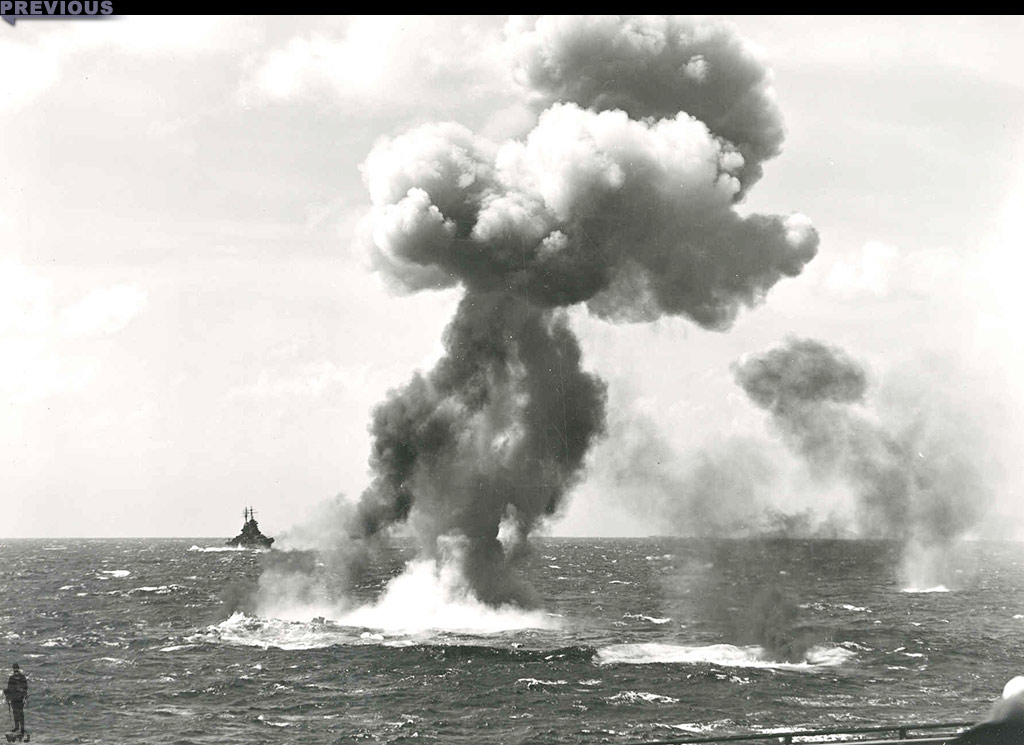
fighter-bombers of the Kemmu Squadron. The curtain of anti-aircraft fire
 which was now an
integral part of any American fleet defense managed to keep out all but four
planes. Shortly after noon, another 210 aircraft were dispatched, only half of
which were destroyed or turned back by the now fatigued American fighter cover.
The remaining aircraft streamed into the air over the anchorages and ships
immediately offshore, triggering one of the most dramatic and intense air
assaults ever. Over two dozen of the Thunder God's Kemmu Squadron managed to
crash into destroyers, minesweepers, ammunition carriers and other larger
warships. The next day, as the bulk of American carrier aircraft were
distracted by the approaching battleship Yamato and her escort, another
110 aircraft and 12 Kemmu bombers struck, causing more damage. which was now an
integral part of any American fleet defense managed to keep out all but four
planes. Shortly after noon, another 210 aircraft were dispatched, only half of
which were destroyed or turned back by the now fatigued American fighter cover.
The remaining aircraft streamed into the air over the anchorages and ships
immediately offshore, triggering one of the most dramatic and intense air
assaults ever. Over two dozen of the Thunder God's Kemmu Squadron managed to
crash into destroyers, minesweepers, ammunition carriers and other larger
warships. The next day, as the bulk of American carrier aircraft were
distracted by the approaching battleship Yamato and her escort, another
110 aircraft and 12 Kemmu bombers struck, causing more damage.
On
April 9, Admiral Ugaki ordered Operation Kikusui Number Two. Two days
later 60 Navy planes joined 16 Thunder Gods from the Kemmu Squadron in another
attack on American ships off Okinawa. They were followed the next day by 120
army and navy planes accompanying nine Betty bombers carrying Ohkas and 19 more
Thunder Gods flying fighter-bombers. This attack was typical in that many of
the incoming Betty pilots mistook the American destroyer pickets for the main
fleet. They were by then so hard pressed by American combat air patrols that
they attacked the first ships they saw, correctly believing that they could ill
afford to pick and choose. This particular mission launched the most effective
Ohka attack of the war. Thunder God Sub-lieutenant Sabura Dohi – who had
been keeping himself distracted with odd jobs around the airbase right up until
his departure – crashed his Ohka into the American destroyer Mannert L.
Abele. The destroyer broke in half and sank along with one-third of her
crew. Three other Ohkas successfully attacked but they only caused moderate
damage to their targets.
The effect of these attacks on American
morale was immediate and devastating. Within a week, nine American ships were
sunk and 78 had been damaged by numerous major air assaults and countless small
sorties. The surviving American crews were quickly becoming exhausted from
standing 24 hour watches against potential attacks, and the aircraft
complements for the carrier groups were thinning noticeably. Even the Japanese
began noticing the increase in the number of returning aircraft, whereas
previously the American combat air patrols had efficiently chewed up everything
sent their way.
During the last half of April and the beginning of
May, four more operations were conducted against the fleet operating off
Okinawa. The climax occurred with Operation Kikusui Number Six, when on
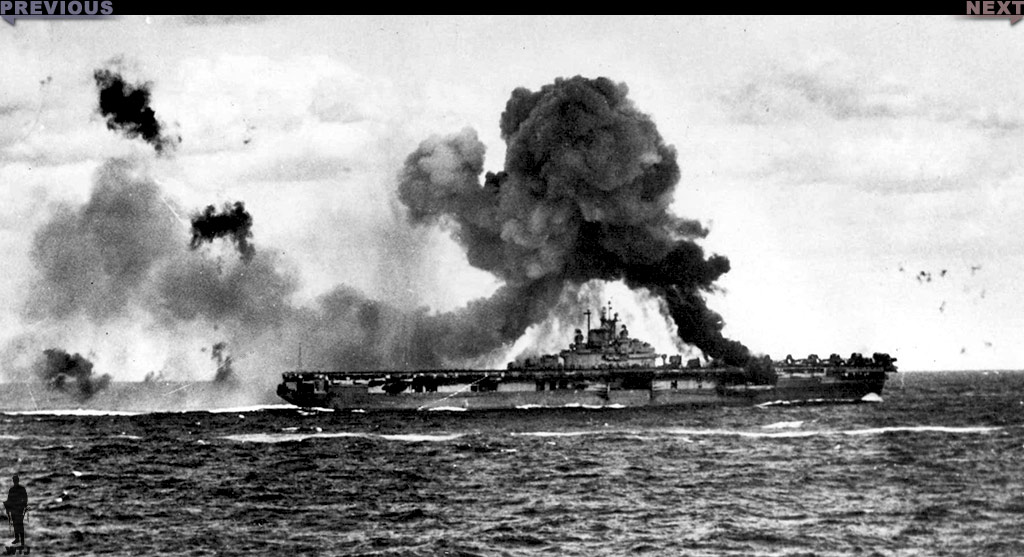
May 11 the large American carrier flagship Bunker Hill was struck by a
Thunder God from the Kemmu Squadron. Severely damaged and on fire, the flag was
transferred to Enterprise. Even though the fleet managed a 900 plane
counterattack on the airbases in Southern Japan the very next day, 28
fighter-bombers from the Kemmu Squadron managed to get into the air, one of
which broke through the ring of steel around the American carrier fleet. This
pilot crashed into the deck of Enterprise near the forward elevator,
causing a stunning explosion and ball of fire which blew the entire elevator
hundreds of feet into the air.
Four more special attack operations
were flown through the rest of May and June. As the American ground troops on
Okinawa slowly cornered the remaining Japanese defenders, the last operation
– Operation Kikusui Number Ten – was a complete failure. Not
many aircraft could be made airworthy and the few attackers who approached the
American fleet were shot down or forced to turn back. That this was the last
official operation mattered little, as the entire special attack system was now
on the verge of collapse. When it became obvious that Okinawa was lost, all
attacks were stopped in preparation for the anticipated attack against the
Japanese mainland.
By August the Thunder Gods Corps had been
redeployed and was awaiting the new improved rocket planes which were to be far
sturdier and longer ranged than the previous models. Since the invaders would
be immediately offshore range was less of an issue
 anyway. Many of the men were
now almost delirious due to stress. They had already flown missions to sure
death, only to be turned back because of mechanical failure or combat damage to
the Betty bombers in which they rode. Keisuke Yamamura had been dispatched on
three Ohka missions, two of which had him inside the rocket plane itself
awaiting release when the missions aborted. Nevertheless he wore an extra-long
headband declaring his determination to die and follow his friends. anyway. Many of the men were
now almost delirious due to stress. They had already flown missions to sure
death, only to be turned back because of mechanical failure or combat damage to
the Betty bombers in which they rode. Keisuke Yamamura had been dispatched on
three Ohka missions, two of which had him inside the rocket plane itself
awaiting release when the missions aborted. Nevertheless he wore an extra-long
headband declaring his determination to die and follow his friends.
On August 8 a report came in through military headquarters that a raid by a
small number of B-29 bombers had been made upon Hiroshima. It mentioned the
possible use of a new bomb and that an investigation was being conducted. It
soon became clear that the futuristic A-Bomb which had so long been the
topic of speculation had now been used, and that the future itself – both
for the Thunder Gods and Japan – was suddenly unclear. Over the next few
days news of the Nagasaki bombing, the Russian declaration of war and the
negotiations with the Allies trickled into the Thunder God's base. Debate among
officers became open. Many senior ranking officers expected to be consulted by
their superiors in Tokyo, Vice-Admiral Ugaki not the least among them. All of
them expected to continue the war to the last person. Alternatives were not
even considered by many of the officers.
When Emperor Hirohito's
decision to end the war was announced, the end did not come quietly. Virtually
the entire Fifth Air Fleet command rebelled. On August 14, Kamikaze program
pioneer Admiral Onishi told a close friend "It was not I who lost the war, but
the Emperor." That evening he committed ritual suicide. Vice-Admiral Ugaki
rebelled against the Imperial edict by leading a last flight of 11 Judy dive
bombers in a fruitless mission against American shipping near Okinawa. Admiral
Ozawa at Naval General Headquarters was furious with Ugaki, not only for
disobeying the imperial mandate but for taking other men with him in the
process of killing himself. Ugaki was denied the posthumous promotion which
other suicide mission members usually received. His replacement, Vice-Admiral
Ryunosuke Kusaka, found himself in charge of a rebellious group of senior
officers who were demanding that the imperial mandate be ignored. He finally
convinced them that Fifth Air Fleet's chief-of-staff be allowed to fly to Tokyo
to hear the orders in person. In the meantime individual men and officers
discussed the technical meaning of surrender, what would happen to them, and
whether the Americans would kill them. Some groups of men planned spontaneous
mutinies, but for each group of mutineers two other groups would refuse to take
part, insisting that they wait for formal orders. As each miniature rebellion
fell apart, more of the men came to rely on their officer's final decisions.
On the evening of August 19, Vice-Admiral Kusaka was able to call a
general meeting of the Fifth Air Fleet's commanders. As he entered the room, it
did not escape his notice that all his officers were in their dress uniforms
and armed, hands poised on their weapons. He fully expected to be killed within
minutes. His chief-of-staff then announced that the Emperor had indeed made the
decision on his own, and that he was resolute in his decision to end the war.
As he re-read the Emperor's announcement, the officers in the room broke into a
yelling match, Kusaka strode to the podium and told them "As your
commander-in-chief, I came to Kyushu with the firm intention of dying with all
of you. However, whether we fight or not is absolutely subject to Imperial
mandate. If the Emperor says stop fighting, I must do my utmost to bring the
war to an end. I hope you will understand and cooperate. At the same time, I
know some of you feel differently. But I will have my way as long as I live. If
you disagree with that, kill me before you take any action! I'm ready. Do it
immediately!" With that, he sat down and closed his eyes.
Lessons and
Afterthoughts Vice-Admiral Kusaka was spared by his officers that
evening. Most of them left the room, some weeping in anger and others arguing.
During the following weeks the Fifth Naval Air Fleet was successfully
demobilized and the equipment prepared for handover. Kusaka's men were given
money and then flown to air bases nearest their home towns. Ironically, the
manner in which this war was brought to an end was second guessed by both
sides. Many Japanese officers considered that they had been betrayed and that
the real battle would have taken place on Japanese soil. More recently some in
the United States have questioned their own country's 1945 use of nuclear
weapons, thinking with decades-old hindsight that Japan might have been
convinced to surrender in some other way. Reading the accounts of these
imperial navy officers, it is clear that even with the leverage offered by the
hopelessness of atomic bombs and a Soviet declaration of war, the Japanese
Emperor barely succeeded in demobilizing his own officers. Had the situation
been less hopeless, his order to cease hosilities may well have been ignored by
large portions of the officers corps, triggering an unknown but probably tragic
series of events.
|
 |
|